Why Puzzles?
Yes, there are a ton of conferences out there – what makes this one so special you ask???
Here are our top 5 reasons:
- ACCESSIBLE: A national conference at 1/3 of the cost plus no travel fees. All sessions are recorded so you can watch live and/or at your own pace for 3 months post-conference.
- CONTENT: Focuses entirely on college SA/DV. All presenters are required to incorporate self-care and intersectionality into their sessions.
- PRESENTERS: We bring in headliners, but also spotlight local rock stars; we want the folks who DO the actual work.
- INCENTIVES: As an incentive to network with other participants, play morning games, and to visit our sponsor exhibitor booths, we will award multiple cash prizes per day. Winners will get cash Venmo’d straight to them!
- COMMUNITY: Puzzles is centered on the importance of building relationships and community. Our plentiful and hard-working team strives to create a personalized, connected, supportive, and welcoming conference experience tailored to you. Even though we are virtual, we believe you will continue to feel our personal connection!
2026 Conference Overview
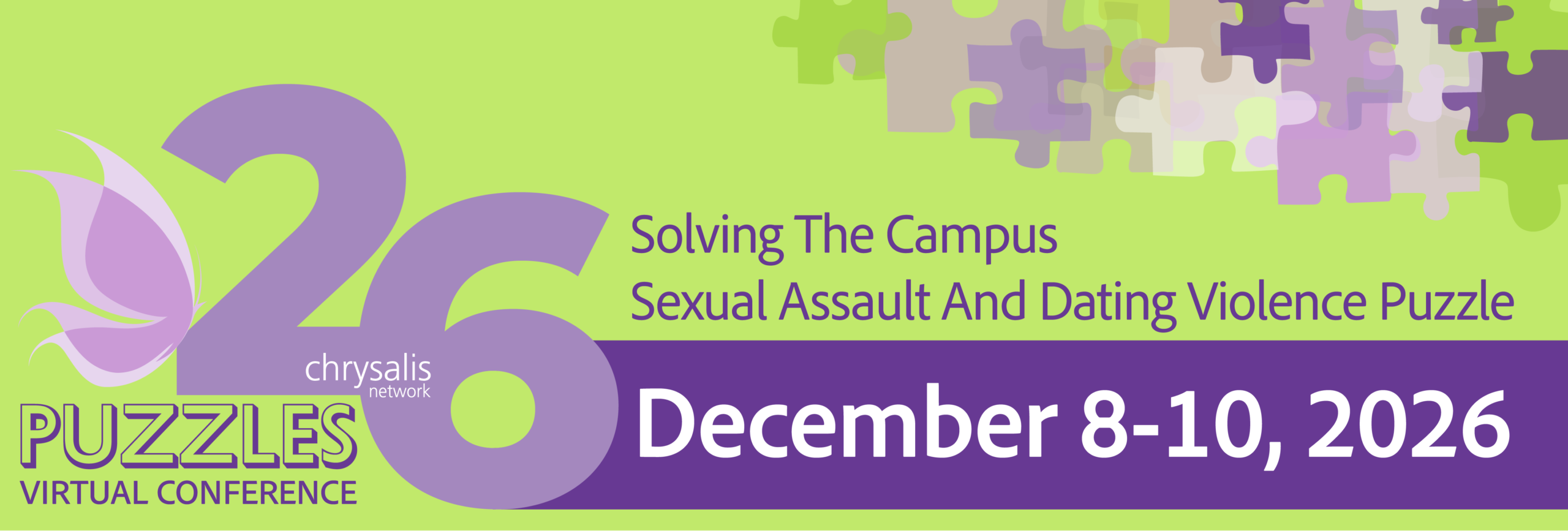
Chrysalis Network, the NC State University Counseling Center, and the NC State University Women’s Center are excited to bring you the 13th annual Solving the Campus Sexual Assault & Dating Violence Puzzle National VIRTUAL Conference.
As the national lens continues to bring much-needed attention to the crisis of sexual and dating violence, now is the time to celebrate and learn from the transformative prevention and response work being done in and around our college communities.
This year’s conference will highlight the courageous work of those on campuses and in the community who remain relentless in their push to inspire action, accountability, and healing.
While “Puzzles”, as it has come to be known, facilitates learning opportunities in a traditional conference format, it is grounded in building community through relationships and wellness. We offer a variety of opportunities for participants to connect with each other, experience mindfulness and wellness activities, and even win cash by playing games and being part of daily engagement challenges.
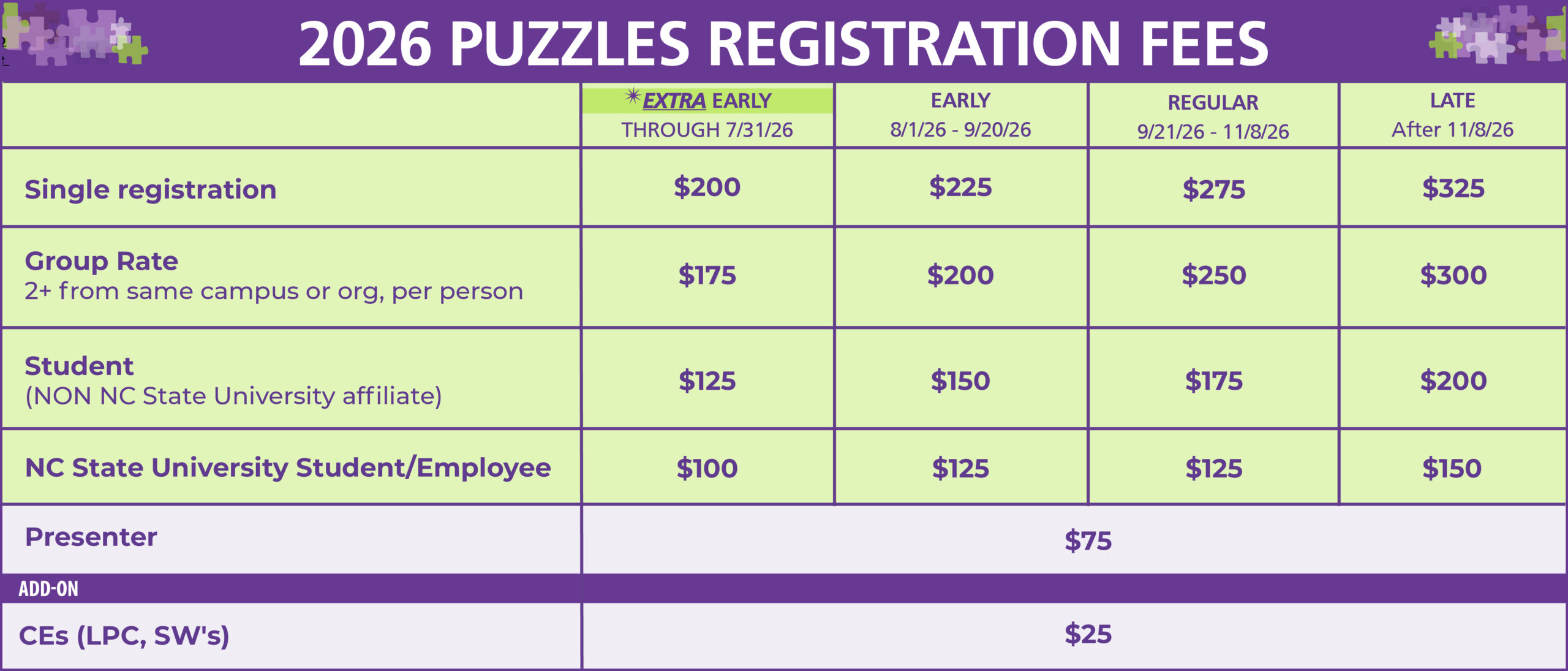
Puzzles ’26 IMPORTANT DATES
*While applications are due 9/1, if you need some extra time, we understand! Just email Juliette: juliette@chrysalisnetwork.com
#PuzzlesNC2026
Follow us on Instagram: @PuzzlesNC

The NC State Counseling Center is proud to partner with the Chrysalis Network to bring the “Solving the Campus Sexual Assault & Dating Violence Puzzle” conference again this year. The Counseling Center is dedicated to being a part of the solution when it comes to sexual assault and interpersonal violence. We recognize the impact these traumatic experiences have on survivors, their friends and family, the campus and larger community as a whole. We also know that there is a stigma regarding what it means to be a survivor of sexual assault and interpersonal violence. With this stigma, survivors can feel unseen, unheard and unsupported. We understand how much courage it takes to reach out. We strive to “Stop the Stigma” and want survivors to know that we see you, we hear you and we are here to support you.
The NC State University Women’s Center is proud to co-host the Puzzles Conference this year. At the Women’s Center, we foster a sense of community and belonging through intentional programming and services focused on supporting student success and retention. Through our high-impact practices centered on gender and interpersonal violence prevention and response, all students – regardless of gender identity – expand their knowledge base, enhance their leadership skills, and explore opportunities for personal and professional growth and well-being, including receiving the affirming support and resources necessary to thrive at NC State. As part of this effort, we are committed to providing space for healing and recovery for individuals impacted by interpersonal violence.
Workshop & Poster Proposals
The 2026 Workshop Proposal Period has Closed
Please consider submitting a workshop, poster, or panel session for Puzzles! We will use a new conference platform this year which will improve the presenter experience. Click the application below for more details.
While applications are due 9/1, if you need some extra time, we understand! Just email Juliette: juliette@chrysalisnetwork.com
Schedule at a Glance
The following agenda is subject to change. Please note that all keynotes and breakouts will be recorded and available for attendees to access through July 2027.
All times are Eastern Standard Time
Tuesday, December 8
11-11:30am Welcome
11:30-1pm Built for This: Pathways from Harm to Accountability in the Age of AI with Dr. Saed Deryck Hill at Yale University
1:30-2:45pm 75-minute Concurrent Breakout Sessions
3-3:45pm Networking Session
4pm-5pm 60-minute Concurrent Breakout Sessions
Wednesday, December 9
10-11am Yoga Class
11:15-11:25am Morning Games + Welcome
11:30-12:45pm 75-minute Concurrent Breakout Sessions
1:30-3pm Relationships and Communication in the Age of AI with Sloan Thompson at EndTAB
3:30-4pm Art self-care session
4-5:15pm 75-minute Concurrent Breakout Sessions
Thursday, December 10
10:45-11am Morning Games
11:15-12:15pm Poster Sessions
1-2:15pm 75-minute Concurrent Breakout Sessions
2:30-3:30pm Student Voices
3:45-5pm Taking Action Group Work + Closing
Workshops, Panels & Poster Sessions
2026 Panels & Workshop Descriptions
Panels
Different Approaches to a Shared Goal: How States are Implementing Every Voice Laws
- Massachusetts Department of Higher Education: Amanda Robbins, Campus Safety Advisor
- Minnesota Office of Higher Education: Melissa Watschke, Title IX Training Administrator
- New Hampshire Department of Justice: Kitty Kiefer, College Consortium Coordinator
- Oregon Higher Education Coordinating Commission: Rowan Frost, Sexual Misconduct Survey Policy Analyst
Engaging Men in Healthy Manhood
A Panel with A Call to Men Staff
- Ted Bunch, Chief Development Officer and Co-Founder
- DeManuel Edmondson, Coordinator for Youth Initiatives
- Rickie Houston, Chief Program Officer
- Rahk Lash, Vice President of Healthy Manhood Initiatives
Workshops
Beyond Silos, Toward Solutions: Connecting Hazing and Sexual Violence Prevention Through Research and Practice
University of North Carolina at Chapel Hill: Holly Lovern, Director of Violence Prevention and Advocacy Services; Pennsylvania State University: Janie Braid, Research Project Manager
Beyond the PowerPoint: Interactive Fraternity Engagement Strategies That Actually Get Students Talking
Montana State University: Madi Herman, Training Development Coordinator
Bringing an Anti-Carceral Lens to Interpersonal Support for Student Survivors of Color
University of Utah: Nadeeka Karunaratne, Senior Research Program Manager; and San José State University: Grace Poon Ghaffari, Assistant Professor of Higher Education and Student Affairs
Building a Choose-Your-Own-Adventure-Style Violence Prevention Workshop
University of Minnesota: Seth Quam, Men’s Engagement Coordinator
Building Bridges for Safety: Campus, Community, and Law Enforcement Partnerships in High-Risk Dating Violence Cases
Elon University: AK Krauss, Campus Advocate; and Family Justice Center of Alamance County: Skye Sullivan, Director
Call It What It Is: Hazing as Sexual Violence
University of Utah: Allie Moore, Senior Education Program Manager
Care, Access, Navigation: Building a Survivor-Centered Campus Response System
University of Georgia: Chaitra Jogiraju; & Truist Bank: Aparna Maheshwaram, Senior Journey Architect
Collaborating with People who Have Caused Harm: Navigating Resistance and Denial
University of Michigan: Ezekiel Medina, Program Manager for Sexual and Gender-Based Misconduct Response Programs; Apara Sharma, Program Manager for Sexual and Gender-Based Misconduct Response Programs; Shana Toor, Assistant Director for Sexual and Gender-Based Misconduct Response Programs
Confidentiality and Common Ground: Pathways to Stronger Title IX and Advocacy Partnerships
National Organization for Victim Advocacy (NOVA): Katy Rogers, Campus Coordinated Community Response (CCR) Program Manager
Creating Your CCRT Operating Manual: Tools for Sustaining a Survivor-Centered Campus
Counseling and Wellness Center of Pittsburgh: Stephanie Benincase, Senior Psychotherapist
Culture Cures: Centering Culture and Identity in Sexual Violence Prevention and Response
Wayne State University: Larmender Davis, Director of Office of Sexual Violence Prevention and Education
Dear Me: A Letter to Myself Concerning My Well-Being
Wayne State University: Danielle Beckford, Program Specialist
Destigmatizing dialogues and other applications of culturally relevant pedagogy to bystander intervention
Calibrated Educational Consulting: Christy Anthony, Principal
Educational Interventions for Respondents: Perspectives from Practitioners and Future Directions
Tulane University: Julia Broussard, Assistant Provost of Title IX Compliance and Education; University of Utah: Nadeeka Karunaratne, Senior Research Program Manager & Libna Noor, Multi-Lingual Victim-Survivor Advocate
From Listening to Action: Advocate Voices Transforming Campus Responses to Sexual Assault and Dating Violence
National Organization for Victim Advocacy (NOVA): Arely Hernandez, Associate Director of Campus Advocacy
Getting Your Community on the Same Wavelength: Facilitating Healthy Relationships Through Gamified Programming
University of North Carolina at Chapel Hill: Kylin Adams, Prevention Programs Specialist
Hearing the S.O.S. – A Case Study on Specialized Support Groups as an Intervention for Intimate Partner Stalking
Northwestern University: Alexandra Araujo Gonzalez, Associate Director of Interpersonal Violence Prevention and Response
Imposter Conditioning™: Why Experienced Practitioners Mistake Inequitable Systems for Personal Failure and How to Interrupt It
Re:visionary Leadership: Amy Circosta, Founder
Increasing Data-Informed Decision-Making for Culturally Specific Prevention and Awareness Programming
Clery Center: Simone Dixon, Assistant Director of Programs-Campus Grant
Let’s Hear It for the B’s!: Supporting Bisexual Survivors
Safe Connections, Emily Stoinski, Community Education Coordinator
Mandatory Reporting: Balancing Trust & Truth
Saint Mary’s College: Liz Baumann, Director for Harassment Education & Response / Title IX Officer
More Than Revenge: Exploring Gender, Power, and Image-Based Sexual Abuse
ECHO Wellness Project: Alyssa Ayon, Founder/Training Facilitator
Owning Survivor-Professional and Empowering The Next Generation
Clemson University: Megan Fallon, Interpersonal Violence Prevention Coordinator & Katrice Robertson, CARW Case Manager/Coordinator
Piecing Together Safety: Centering International and Multicultural Students in Campus Sexual Assault and Dating Violence Prevention
Kansas State University: Sarah Egbo, PhD Student
Putting the Sex (Ed) back in Sexual Violence Prevention
University of Wisconsin – Madison: Sam Bowen, Assistant Director for Violence Prevention
Reducing Barriers and Expediting Treatment: A Pilot Program of Direct Access Counseling Services to Survivors on a College Campus
Temple University: Nicole Ramspacher, Sexual Assault Counseling and Education Unit Coordinator & Charlotte Strauss-Swanson, Sexual Assault Counseling and Education, Unit Assistant Coordinator
Sharing Power, Building Agency: A Practical Framework for Trauma-Informed Supervision of Campus-Based Advocates
Counseling and Wellness Center of Pittsburgh: Stephanie Benincase, Senior Psychotherapist
Strong at What Cost? Understanding the Superwoman Schema and Its Impact on Black Women
Tulane University: Sarika Griffin, DWS Student
THE BIG PICTURE: Sustaining the Civil Rights of Postsecondary Students and Employees through the “Difficult Days Ahead”
ED-OCR Alumni Collective: Howard Kallem, Founding Member & Paul Grossman, Founding Member
The Commission of Structural Violence that Leads to Gender-Based Violence on Campuses
Virginia Commonwealth University: Dr. Adrienne Baldwin-White, Assistant Professor; and University of Chicago: Dr. Gina Fedock, Associate Professor
The Good, the Bad and the Preventable: Using Instagram as a Tool in Prevention Education.
George Mason University: Hailie Baker, Assistant Director of Sexual and Interpersonal Violence Response and Prevention & Marissa Gandolfo-Muller, Assistant Director of Sexual and Interpersonal Violence and Student Support
The Impact of Hope: A Research-informed Approach to Culture Change and Individual Sustainability
CLA Training and Consulting: Constance Adams, Trainer and Consultant
Utilizing Technology to Prevent Sexual and Dating Violence on Campus
Virginia Commonwealth University: Dr. Adrienne Baldwin-White, Assistant Professor
Keynote Speakers
Built for This: Masculinity, AI, and Pathways from Harm to Accountability
Students and communities are living in a moment where three forces once treated as separate are increasingly impossible to untangle: the rise of AI companions and algorithmic influence on relationships, the pull of online radicalization on young men, and the ongoing work of holding people accountable for harm while still believing in their capacity to change. Professionals in this field are often asked to respond to each of these in isolation – as a tech risk, an extremism concern, or a Title IX case, without a shared framework for understanding how they connect.
In this keynote, Dr. Saed D. Hill draws on his work as the Harm Reduction & Community Support Specialist at Yale Health’s SHARE Center, his ongoing exploration of AI companions and human connection, and a consultant in online deradicalization, to trace the throughline connecting these domains. Building on last year’s conversation about AI and campus relationships, this session goes further, examining how unaddressed masculine socialization becomes vulnerable to algorithmic design, how that vulnerability can accelerate toward radicalization, and how the accountability frameworks used in respondent work may hold the key to intervening earlier in both.
Attendees will leave with a clear framework for understanding how these systems intersect, and practical strategies they can apply to violence prevention, response, and accountability work, no matter whatever form the harm takes.
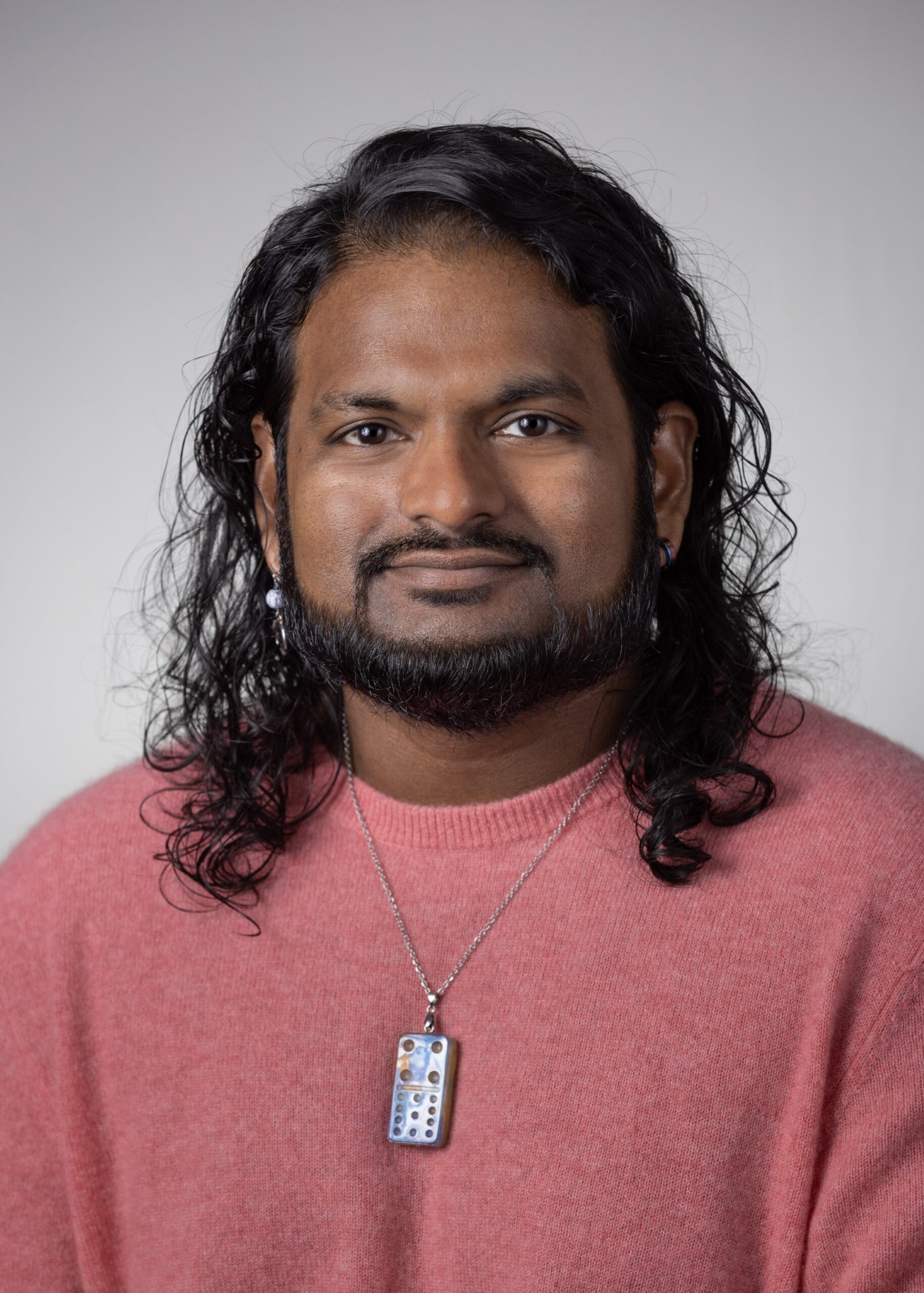
Dr. Saed Deryck Hill, Ph.D. is a Counseling Psychologist and Independent Consultant, who specializes in the promotion of pro-social masculinities and wellness as a means of violence prevention. He provides trainings, 1on1 coaching, and strategic consulting on the topic of expansive and restrictive masculinities and has also been featured on several podcasts and other forms of media addressing the broad topics of domestic and global prevention, divesting from the Manosphere, and how advancing technology like Artificial Intelligence (AI) is influencing men and boys online. Dr. Hill works with national organizations, school districts, higher education institutions, nonprofits, and other communities to train staff, facilitate workshops, design curricula, promote bystander intervention, and manage respondent support and alternative resolution processes.
Dr. Hill also advised the White House Task Force to Address Online Harassment and Abuse in 2022, serves as a member of The Boys Club of New York City’s Professional Advisory Council, is the President-Elect for the American Psychological Association’s Society for the Psychological Study of Men and Masculinities, and served as the Assistant Director of Prevention & Masculine Engagement at Northwestern University for six years. He also co-hosts the Why Humans? Podcast which examines how artificial intelligence is reshaping the human experience.
Dr. Hill earned his Ph.D. from The University of Missouri-Kansas City and completed his Doctoral Internship at the University of North Carolina at Chapel Hill. In his spare time, he enjoys psychoanalyzing trashy reality TV, obsessing about fantasy football, kayaking, and attempting (sometimes successfully) to cook his mother’s best Guyanese food recipes.
Relationships and Communication in the Age of AI
AI is shaping how people date, communicate, and navigate relationships. This session examines the growing role of AI in dating apps, texting, and decision-making, including the use of AI for advice and conflict navigation. We explore how outsourcing emotional processing to AI can impact communication skills, relational development, and expectations of partners. Participants will leave with practical strategies to address these shifts in education and prevention work, helping individuals build emotional intelligence, maintain agency, and foster healthy, reciprocal relationships in an AI-integrated world.
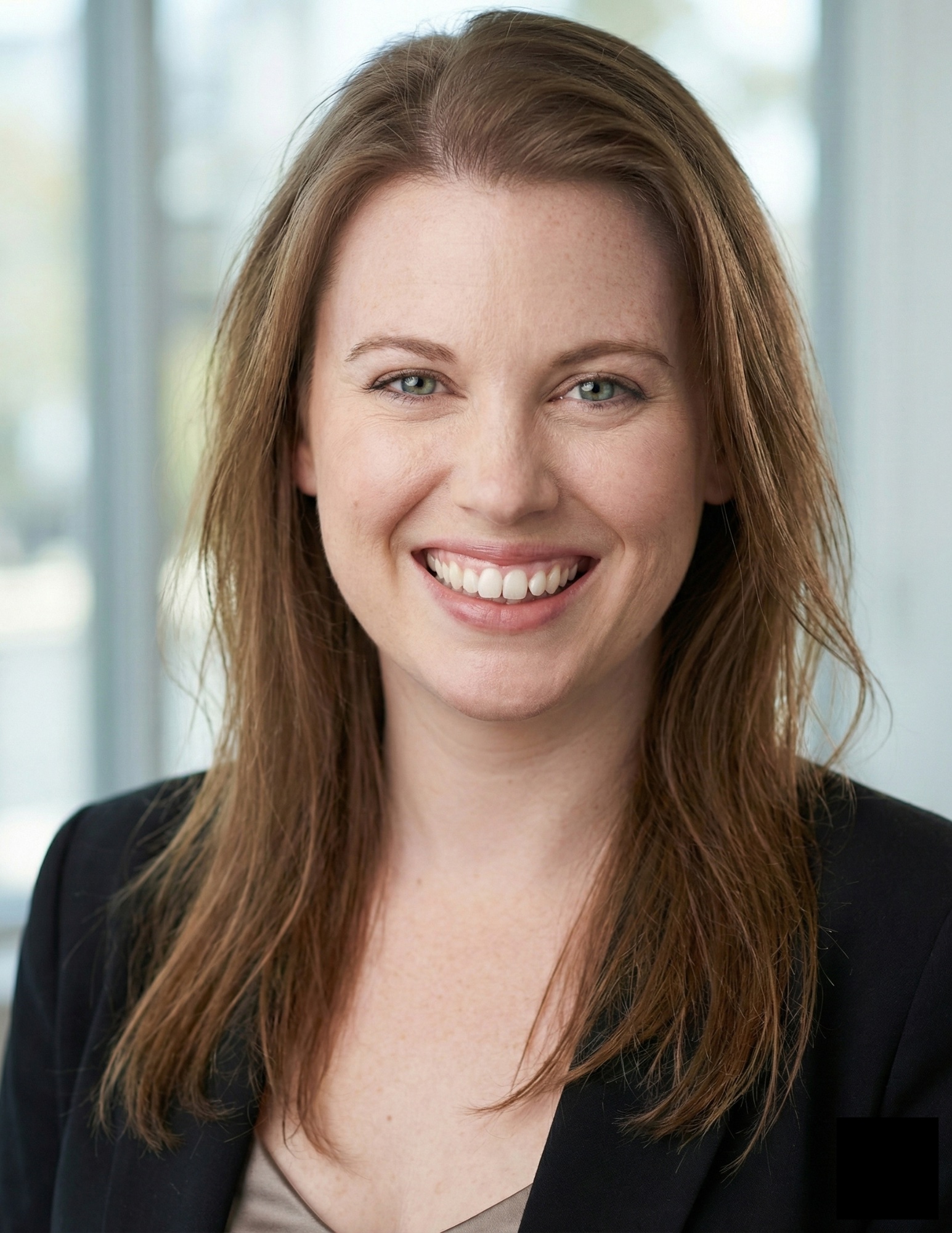
Sloan Thompson is the Director of Education and AI Initiatives at EndTAB, where she leads the development of national training programs at the intersection of artificial intelligence, relationships, and digital safety. Her work focuses on helping professionals understand how emerging technologies are reshaping communication, intimacy, and harm—and how to respond with practical, trauma-informed strategies.
Sloan designs and delivers trainings for a wide range of audiences, including high-level administrators, policymakers, and field leaders, as well as frontline practitioners and students. She specializes in translating complex technological shifts into clear, actionable guidance, with a focus on AI-mediated relationships, artificial intimacy, and evolving forms of technology-facilitated violence.
She is a nationally recognized keynote speaker who has presented for institutions and organizations including MIT, Yale University, Columbia University, the Conference on Crimes Against Women, and the U.S. Department of the Air Force. Sloan also contributes to public discourse as an expert voice on AI and relationships, with her insights featured in media outlets such as WIRED and Mashable, as well as podcasts and other public platforms.
Her work is grounded in a background in violence prevention and healthy relationships education, with an emphasis on consent, communication, and emotional safety in an increasingly digital world. Prior to her current role, Sloan worked with the DC Coalition Against Domestic Violence as a Training and Outreach Specialist and the University of North Carolina at Chapel Hill as a Violence Prevention Coordinator. She holds degrees from the University of British Columbia and the University of North Carolina at Chapel Hill.
Ditching the Script: Engaging College Men in Connection, Care, and Prevention
College campuses are navigating a critical moment in engaging young men around connection, care, and responsibility. This session by Futures Without Violence will provide an overview of key strategies for engaging college men as partners in violence prevention and building stronger campus communities.
Futures Without Violence’s CATAPULT: Campus Action team will share practical approaches to engaging men through relationship-building, messaging, storytelling, student voice, and peer leadership. Participants will then explore concrete campus examples—including Unscripted, a national storytelling and dialogue campaign that invites young men to question the expectations they’ve inherited and consider the stories they want to tell about manhood, relationships, mental health and community.
Drawing on current research and campus-based practice, the session will explore how efforts like Unscripted can complement existing prevention work, activate student leadership, and support campus cultures grounded in care, respect, and accountability. Participants will leave with practical tools, examples, and considerations for adapting these strategies to their own campus contexts.
Jesse Mahler
Futures Without Violence
Program Manager
Public Education Campaigns & Programs
As Program Manager in the Public Education Campaigns and Programs Department of Futures Without Violence, Jesse advances national violence prevention campaigns with men and boys, athletic coaches, educators, colleges, and digital influencers. Since 2019, Jesse has led the curriculum development and training for the evidence-based Coaching Boys Into Men program, supporting implementation across hundreds of communities. During this time, he has also designed dozens of college training and the comprehensive Engaging Campus Men Toolkit, utilized by hundreds of institutions across the United States through the Office on Violence Against Women’s Campus Grant Program and the CATAPULT Campus Action for Healthy Manhood initiative. More recently, Jesse has spearheaded FUTURES partnership with Equimundo: Center for Masculinities and Social Justice—the LinkUp Lab—where he co-authored the Manosphere Rewired research report and designs innovative interventions against tech-based violence and online misogyny. Prior to FUTURES, Jesse was a youth organizer in Boston and facilitated healing spaces for men in the Jewish community.
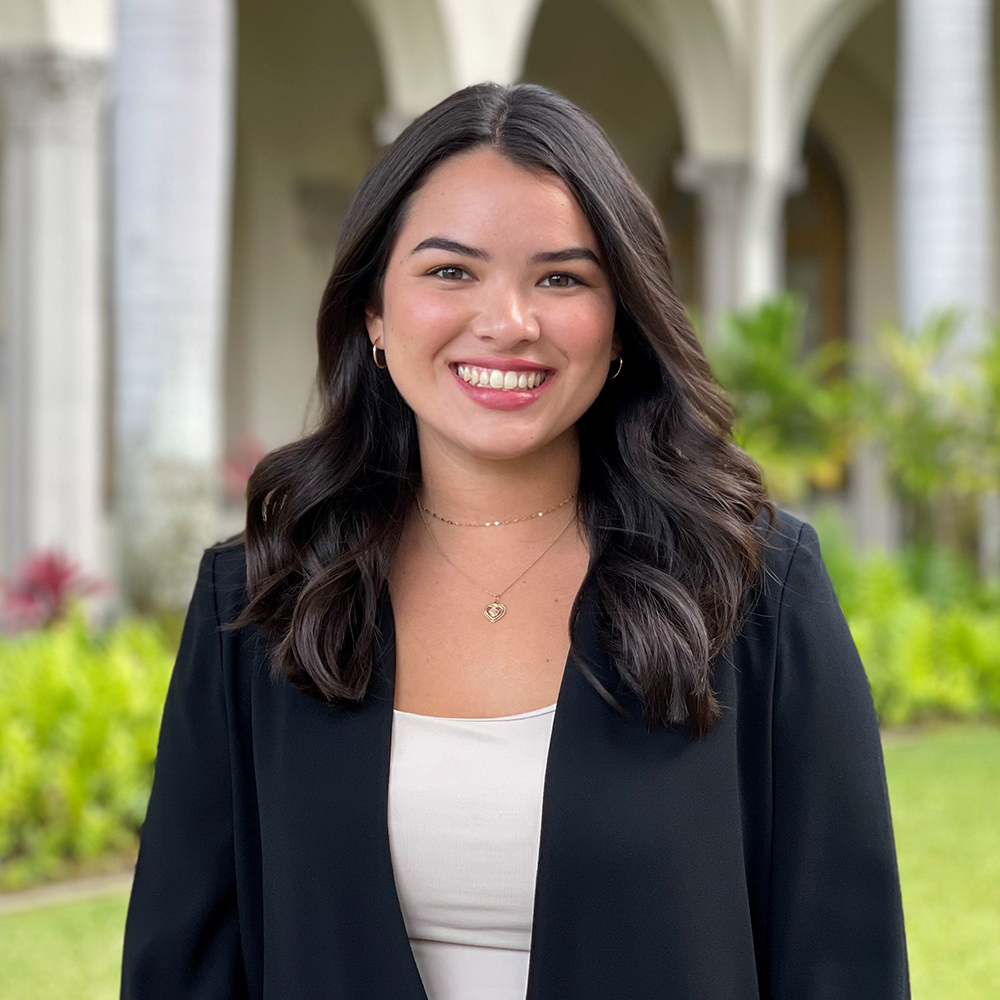
Kamaile Patton
Futures Without Violence
Program Specialist
Public Education Campaigns & Programs
Kamaile is a Program Specialist at Futures Without Violence, where she supports national initiatives to engage men and boys as partners in ending and preventing violence. Her work centers on shifting cultural norms that contribute to harm and fostering greater connection through training and technical assistance, curriculum development, collaborative learning spaces, and practical tools and resources for community partners such as college campuses, athletic coaches, DVSAS advocates, and educators. By cultivating healthy relationships, positive mental health, and more expansive understandings of gender and masculinity, Kamaile’s work is grounded in the belief that safer, more connected communities are possible. With experience in gender equity work across nonprofit, government, and research settings, Kamaile brings a community-informed, prevention-focused approach to program development. Prior to joining FUTURES in 2022, Kamaile earned her Master of Public Affairs from Brown University and her BA in Peace & Conflict Studies from Chapman University.
For More Information:
Juliette Grimmett
juliette@chrysalisnetwork.com
(919) 624-9575